
How to prepare your plant for a video shoot
Pick a day when the line you want to show is really running, name one contact who can pause a station, and send the crew your safety rules ahead of time. Decide what stays off camera. Plan interviews away from the line, because a running machine is loud enough to bury a voice.
Updated October 21, 2026. Written by our crew in Port St. Lucie from shoots on real production floors.
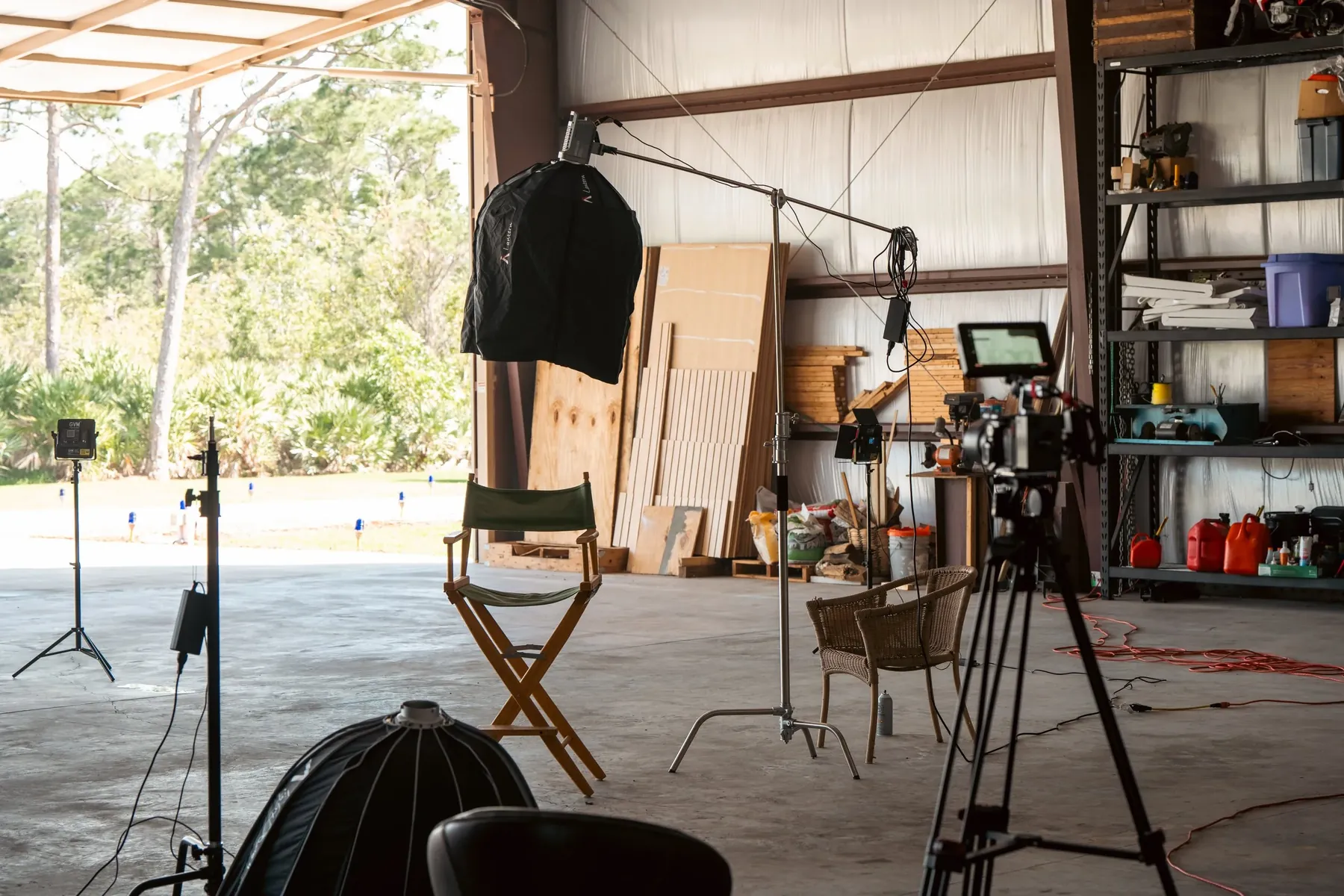
Two weeks out: pick the day and the person
The best footage comes from a normal production day, not a staged one. Machines running, parts moving and people doing their real jobs read as true on camera, and a buyer can tell the difference. So pick a day when the line you want to show is actually running the product you want to sell.
Then name one contact for the shoot. That person walks the floor with us, knows who can be on camera and can pause a station for a few minutes when a shot needs it. Without that person, every small question turns into a hunt for a supervisor, and the day slips.
What to send us before the shoot
- Your safety rules. PPE, marked walkways, areas where cameras are not allowed, and any training a visitor needs before stepping on the floor. Our crew follows your plant rules, every time.
- The shots you care about. The machine that makes you different, the step buyers always ask about, the finished product on the dock.
- What stays off camera. Customer parts, drawings, screens with prices or names, and any process you treat as a trade secret.
- Who signs off. Who can appear on camera, and the one person who approves the cut.
Noise, and why interviews happen away from the line
Plants are loud, and that matters for two reasons. The first is safety. Under the federal noise rule, OSHA 1910.95, an employer needs a hearing conservation program when workers are exposed to an 8 hour average of 85 decibels or more, and the permissible exposure for 8 hours is 90 decibels. If your floor calls for hearing protection, our crew wears it too.
The second is sound. A running line drowns a voice, even with a microphone on the person talking. So we film the machines with their real sound while the line runs, and we record interviews somewhere quieter, an office or a break room, with the floor visible through a window or a door when we can. The edit puts the two back together.
The day of the shoot
- Walk the floor first. About 30 minutes with your contact before any camera comes out. We look at the light, the paths and where we can stand without getting in anyone's way.
- Film the process in order. Raw material, each step, inspection, packing, the truck. A buyer follows the story of the part, so we shoot it in that order.
- Get the close ups. Hands on the controls, a part being measured, the finish on a surface. These are the shots a spec sheet cannot show.
- Talk to the people. Short, plain interviews with the person who runs the machine, the engineer or the owner. A real operator explains a product better than a script does.
- Fly the outside, if the site allows it. Aerials of the building, the yard and the loading dock show scale in a few seconds.
- Check the list before we pack. We go back over your shot list with your contact, so nothing you asked for is missing when we get to the edit.
What one plant shoot can turn into
| Piece | Where it gets used |
|---|---|
| Brand film | The home page, trade show screens and sales meetings. |
| Install or how it works video | Product pages, dealer training and support. |
| Product photos and aerials | Catalogs, spec sheets and social posts. |
| 3D renders and animation | Parts that are hard to film, the inside of a product, or a model that is not built yet. |
We decide which pieces come out of the day before the shoot, so the crew films what each one needs and nobody has to come back.
Shooting a plant on the Treasure Coast
We are based in Port St. Lucie. Plants and shops in Fort Pierce, Stuart, Vero Beach and around Port St. Lucie are a short drive, so we can come walk the floor before the shoot day and plan it with you in person. Fort Pierce has a working port and an airport, and Stuart has boat builders and marine suppliers, so we are used to filming big parts, loud equipment and tight spaces. For the right project we travel anywhere.
Questions
Do we need to stop production for the shoot?
No. We want the line running, because a running line is what buyers want to see. We may ask your contact to pause one station for a few minutes for a close up or an interview, and we plan those pauses with them ahead of time.
Will your crew follow our safety rules?
Yes. Send us your PPE list, marked walkways and any visitor training before the day, and our crew follows them on the floor. If an area calls for hearing protection, we wear it and plan the sound around it.
Can you keep parts of our process off camera?
Yes. Tell us what stays out, such as customer parts, drawings or screens, and we frame around it. You see the cut before anything is published, so you can flag anything we missed.
What should our people wear on camera?
What they normally wear on the floor, clean and with the company logo if you have one. Real work clothes and the right PPE look better and more honest than anything staged for the day.
How far do you travel for a plant shoot?
We are based in Port St. Lucie and shoot across the Treasure Coast and northern Palm Beach County. For the right project we travel anywhere, including plants outside Florida.